
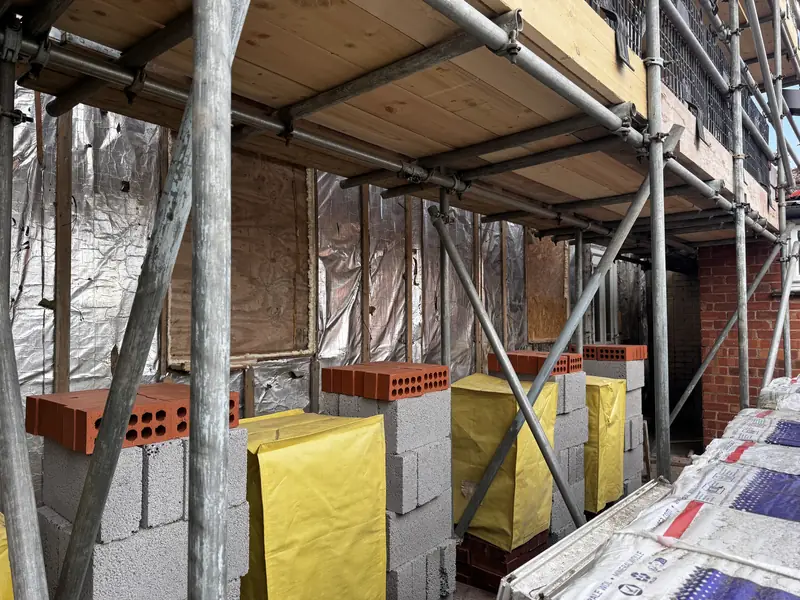
What "non-standard construction" means to a lender
Lenders define a standard house by its walls and roof. Leeds Building Society, for example, describes standard walls as solid (at least 230mm) or cavity (at least 280mm) brick, natural stone, reconstituted stone, concrete block, cob or flint (Leeds BS criteria). Anything outside that kind of definition, such as poured concrete, precast concrete or a steel frame, is "non-standard" and gets a closer look.
What the valuer does
The lender's valuer identifies the construction and decides whether the home is suitable security. NatWest states that even construction types listed as acceptable are "still subject to the valuer confirming the property is suitable security" (NatWest criteria). Valuers can ask for specialist reports, and lenders often say what kind of report they want.
The evidence lenders most often ask for
- A structural engineer's report, commonly for steel-framed and large panel system houses (NatWest, Leeds and Principality all mention one for certain types).
- A PRC repair certificate for designated precast concrete houses, often with a guarantee, and proof that adjoining homes were repaired to the same standard.
- Warranties for modern methods of construction.
Some lenders reject certain evidence. Gatehouse Bank, for example, says retrospective certification issued after the original repair date "is not considered acceptable" (Gatehouse Bank),.
Published criteria by house type (NatWest checked 29 Oct 2026; Leeds, Nottingham, Gatehouse and HSBC 10 Nov 2026)
| Type | NatWest | Leeds BS | Nottingham BS (residential) | Gatehouse | HSBC (10 Nov 2026) |
|---|---|---|---|---|---|
| Wimpey No-Fines | Acceptable | Not stated in the extract we read | Not named | Yes | Acceptable (1945 onwards), max 80% LTV |
| Laing Easiform | Acceptable if built 1945 or later | Not stated | Not named | Yes | Acceptable (1945 onwards), max 80% LTV |
| BISF | Unacceptable, even if reclad | Steel frame: not normally; may consider with outer leaf + engineer's report | Unacceptable, even if reclad | Not stated in the extract we read | Unacceptable |
| Other steel frame | Conventional cladding acceptable; lightweight steel needs engineer's report; steel-clad unacceptable | As BISF row | Unacceptable with post-construction cavity wall insulation; otherwise not named | Not stated | Acceptable with engineer's report, max 80% LTV (not Livett Cartwright or Hawthorn Leslie boarded) |
| PRC, unrepaired (Airey, Cornish, Orlit etc.) | Unacceptable | Not normally acceptable | Not named | No (designated types) | No separate PRC entry |
| PRC, repaired | Houses only: walls rebuilt in traditional materials, PRC Homes Ltd guarantee, whole block done | PRC Homes Ltd approved scheme, 10-year guarantee, all adjacent homes repaired | Not named | Repair certificate concurrent with works; no retrospective certificates; adjoining houses repaired | No separate PRC entry |
| Large panel system (e.g. Reema) | Houses with engineer's report; flats unacceptable | Not stated | Not named | No | Not stated |
Sources: NatWest; Leeds BS; Nottingham BS; Gatehouse Bank; HSBC. Principality Building Society considers large panel system houses (not flats) subject to a structural engineer's report (Principality). "Not stated" means the published text we read did not mention that type; it does not mean the lender accepts it. Nottingham's residential criteria (page updated 2 November 2026) name BISF, framed homes with retrofitted cavity insulation and homes with spray foam roof insulation as unacceptable, also exclude any type the valuer deems unacceptable, and say other non-standard construction "may be acceptable, subject to valuation and underwriting review"; "Not named" means that page does not mention the type.
What about Halifax, Santander, HSBC, Barclays and TSB?
Checked 10 November 2026. Lenders change their criteria often, so check the current version with a broker.
- Halifax: non-standard construction is "assessed on individual merit" on the valuer's report. Unrepaired designated defective properties are not acceptable. Designated PRC houses are generally not accepted "unless the property has been repaired to a scheme that is approved by us", and designated PRC flats and maisonettes are not acceptable. Halifax will accept a retrospective repair certificate in its required format. Timber or metal framed buildings with cavity insulation added later are unacceptable (Halifax).
- Santander: "We lend on PRC homes where they've been repaired to certain standards confirmed by a structural engineer under a PRC approved licence, subject to our valuer's approval" (Santander).
- HSBC: relies on the valuer's comments. Wimpey No-Fines and Laing Easiform built from 1945 onwards are acceptable, subject to the valuer, at a maximum 80% loan to value; HSBC notes No-Fines homes "are currently being monitored in the north of England where some deterioration has been noted". Steel frame is acceptable with a satisfactory structural engineer's report at 80% loan to value, but Livett Cartwright, Hawthorn Leslie (boarded finish) and BISF are "unacceptable for mortgage purposes". HSBC's page has no separate PRC entry (HSBC).
- Barclays: "Early steel frame construction – not normally considered suitable security but may be looked at by a surveyor if a Structural Engineer's Report is obtained." Modern methods of construction need an individual valuer assessment. Barclays' property page has no PRC-specific entry (Barclays).
- TSB: non-standard construction is "assessed on individual merit". Unacceptable: PRC houses where the house or any adjoining property has not been repaired; PRC flats and maisonettes in all circumstances; large panel system properties; pre-1987 steel frames without a valuation report compliant with BRE guidance BR113 and a structural engineer's report; post-1987 steel frames without a WIMLAS/BBA certificate or an acceptable engineer's report; and any property that can't get buildings insurance on standard terms (TSB).
A broker who handles non-standard cases will know who is lending on which types right now.
Steps that make a non-standard mortgage easier
- Identify the type early. Use our house-type guides; confirm with a surveyor if in doubt.
- Gather paperwork: repair certificates, guarantees, building control sign-offs, warranties, and the same for any attached home.
- Talk to a broker who regularly places non-standard cases, before you make an offer if you can.
- Ask the lender exactly what report it wants, in writing, and check the person you instruct can provide exactly that.
- Allow extra time for specialist reports in your sale or purchase timetable.
Buy-to-let, remortgage and equity release
The same construction questions apply to buy-to-let, remortgages and equity release, but each product has its own criteria. Searches for "non standard construction equity release" and "buy to let" are common. We have not reviewed equity release or buy-to-let criteria yet.
If your mortgage application is declined
Ask the lender or broker for the reason, in particular whether it was the construction type, the condition, or missing evidence. A decline on construction type with one lender does not mean every lender will say no. If the issue is missing evidence, a specialist survey or a search for repair records may help.
Frequently asked questions
Can you get a mortgage on a non-standard construction house?
Which lenders accept non-standard construction?
What is a structural engineer's report for a mortgage?
Do lenders accept retrospective PRC certificates?
Is a non-standard construction mortgage more expensive?
Sources
Links open the original page. Lender criteria change often; we show the date we last checked.
- Leeds Building Society, mortgage lending criteria and guidance PDF (effective 21 Oct 2026; checked 10 Nov 2026)
- NatWest Intermediary Solutions, property and valuations criteria (checked 29 Oct 2026)
- Nottingham Building Society, residential lending criteria for intermediaries (page updated 2 Nov 2026; checked 10 Nov 2026)
- Gatehouse Bank, Home Finance property types V17, Dec 2024 (checked 10 Nov 2026)
- Principality Building Society, full lending criteria for intermediaries (checked 10 Nov 2026)
- HSBC UK for Intermediaries, lending criteria: non-standard construction types (checked 10 Nov 2026)
- Halifax Intermediaries, lending criteria (checked 10 Nov 2026)
- Santander for Intermediaries, residential lending criteria (checked 10 Nov 2026)
- Barclays Intermediaries, residential property criteria (checked 10 Nov 2026)
- TSB Intermediary, residential property criteria (checked 10 Nov 2026)