
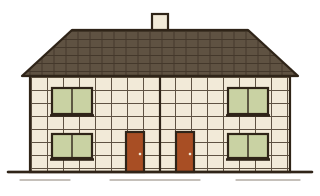
What is an Orlit house?
An Orlit house is built around a frame of precast reinforced concrete (PRC). A structural assessment published by the London Borough of Merton, drawing on BRE's research, describes the typical Orlit house as two-bay, two-storey PRC portal frames with joints cast on site in the beams and bolted connections in the columns. Floors and roof are carried on precast concrete secondary beams between the main frames, and the outside is clad in small precast reinforced concrete panels, with an inner leaf of blockwork tied across a cavity (Merton Council).
The same report says about 17,000 Orlit houses were built in the United Kingdom by 1956: some 9,000 in England and Wales and the rest in Scotland and Northern Ireland (Merton Council).
How to recognise an Orlit house
- 1Small concrete cladding panels on the outside walls, unless the house has been refaced.
- 2Flat or pitched roofs. Merton's report notes some Orlits had flat roofs and others pitched, and that pitched roofs were sometimes added long after the houses were built (Merton Council).
- 3Post-war council estates, often in small groups or terraces.
Refaced or reroofed Orlits can be hard to tell from traditional houses, so ask the seller and the council what records exist.
Is an Orlit house designated defective?
Designated defective? Yes, in England and Wales. Orlit is designated in England and Wales: it is on the national list of designated types (Hansard, 7 Feb 1989; SI 1988/923) under what is now Part XVI of the Housing Act 1985 (Housing Act 1985 Part XVI). In Scotland, designations were made separately and were repealed from 30 July 2018 (Scottish Government).
Known defects
From surveys of 83 houses, BRE identified cracked secondary beams caused by expansive reinforcement corrosion; cracked and poor-quality high-alumina cement (HAC) "stitches" at joints; cracking and spalling of other precast parts such as cladding blocks, window frames, door canopies and roof soffit units; and variable, sometimes high, chloride contents and carbonation depths in the frame, particularly the secondary beams (Merton Council, summarising BRE).
Merton's report says BRE concluded, in part, that no structurally unsafe conditions were found in its sample (Merton Council). That is reassuring as a general finding, but it does not tell you about any particular house, which is why an individual inspection matters.
Repairs and certificates
As with other designated types, repairs were licensed between 1985 and 1996 by PRC Homes Ltd, an NHBC subsidiary, and certificates of completion were accepted by lenders (BRE PN262). BRE now runs a PRC Homes Repair Scheme with a register of repaired properties (BRE). Read our repair certificates explainer if paperwork is missing.
Can you get a mortgage on an Orlit house?
An unrepaired Orlit will be declined by most mainstream lenders. A properly repaired one, with a certificate and adjoining homes done to the same standard, has a much better chance.
| Lender (NatWest checked 29 Oct 2026; Leeds and Gatehouse 10 Nov 2026) | What the published criteria say about PRC homes |
|---|---|
| NatWest | Unrepaired PRC unacceptable "whether designated as defective under the Housing Defects Act or not". Repaired PRC houses only where the walls are totally rebuilt in traditional materials, PRC Homes Ltd has issued a guarantee and every house in the structural block is done to the same standard. PRC flats unacceptable (NatWest). |
| Leeds Building Society | Not normally acceptable; may be considered if repaired under a PRC Homes Limited approved scheme with a 10-year guarantee, the valuer says resale is unaffected, and all adjacent homes are repaired (Leeds BS). |
| Gatehouse Bank | Designated types not repaired under an acceptable licensed scheme are declined; retrospective certification "is not considered acceptable"; adjoining houses must also be repaired (Gatehouse Bank). |
Criteria change. A valuer still has to accept each property. Check the current position with the lender or a broker; we do not give mortgage advice.
What survey should you get?
- A survey by someone experienced with PRC frames, who can confirm the type and repair status.
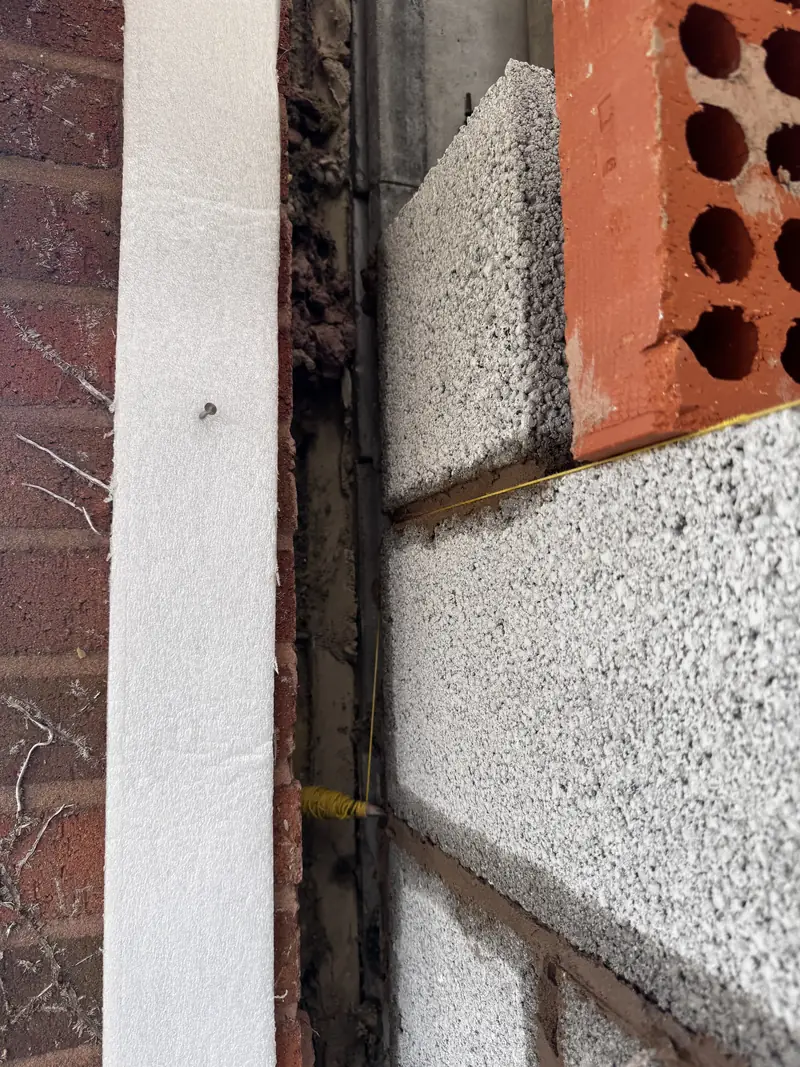
- Concrete testing (for example carbonation depth and chloride content) if the house is unrepaired or the evidence is unclear. In 1983 the government, reporting BRE's findings, said the hidden main and secondary beams in Orlit houses should be inspected (Hansard, 10 Nov 1983). Your surveyor will advise whether further testing is needed.
- Copies of the repair certificate and guarantee for the house and its neighbour before exchange.
Frequently asked questions
Is an Orlit house designated defective?
Can you get a mortgage on an Orlit house?
What goes wrong with Orlit houses?
How many Orlit houses were built?
Do Orlit houses have flat roofs?
Sources
Links open the original page. Lender criteria change often; we show the date we last checked.
- London Borough of Merton, structural assessment of Orlit houses, Ravensbury Estate (PDF)
- Hansard, written answer on defective houses, 7 Feb 1989 (list of designated types)
- The Housing Defects (Expenditure Limits) Order 1988, SI 1988/923, listing the (England and Wales) designations, legislation.gov.uk
- Hansard, Commons debate on defective housing, 10 Nov 1983
- Housing Act 1985, Part XVI (assistance for owners of defective housing), legislation.gov.uk
- Scottish Government, defective designation repeal: guidance
- BRE Global, PN262 Guidance Document: PRC Homes Repair Scheme
- BRE, PRC Homes Repair Scheme (scheme page)
- NatWest Intermediary Solutions, property and valuations criteria (checked 29 Oct 2026)
- Leeds Building Society, mortgage lending criteria and guidance PDF (effective 21 Oct 2026; checked 10 Nov 2026)
- Gatehouse Bank, Home Finance property types V17, Dec 2024 (checked 10 Nov 2026)